Service Dog Etiquette: What to Do (and Not Do) Around a Working Dog
This page explains the law in general terms. It is not legal advice. For a specific situation, contact the agency listed on this site or an attorney.
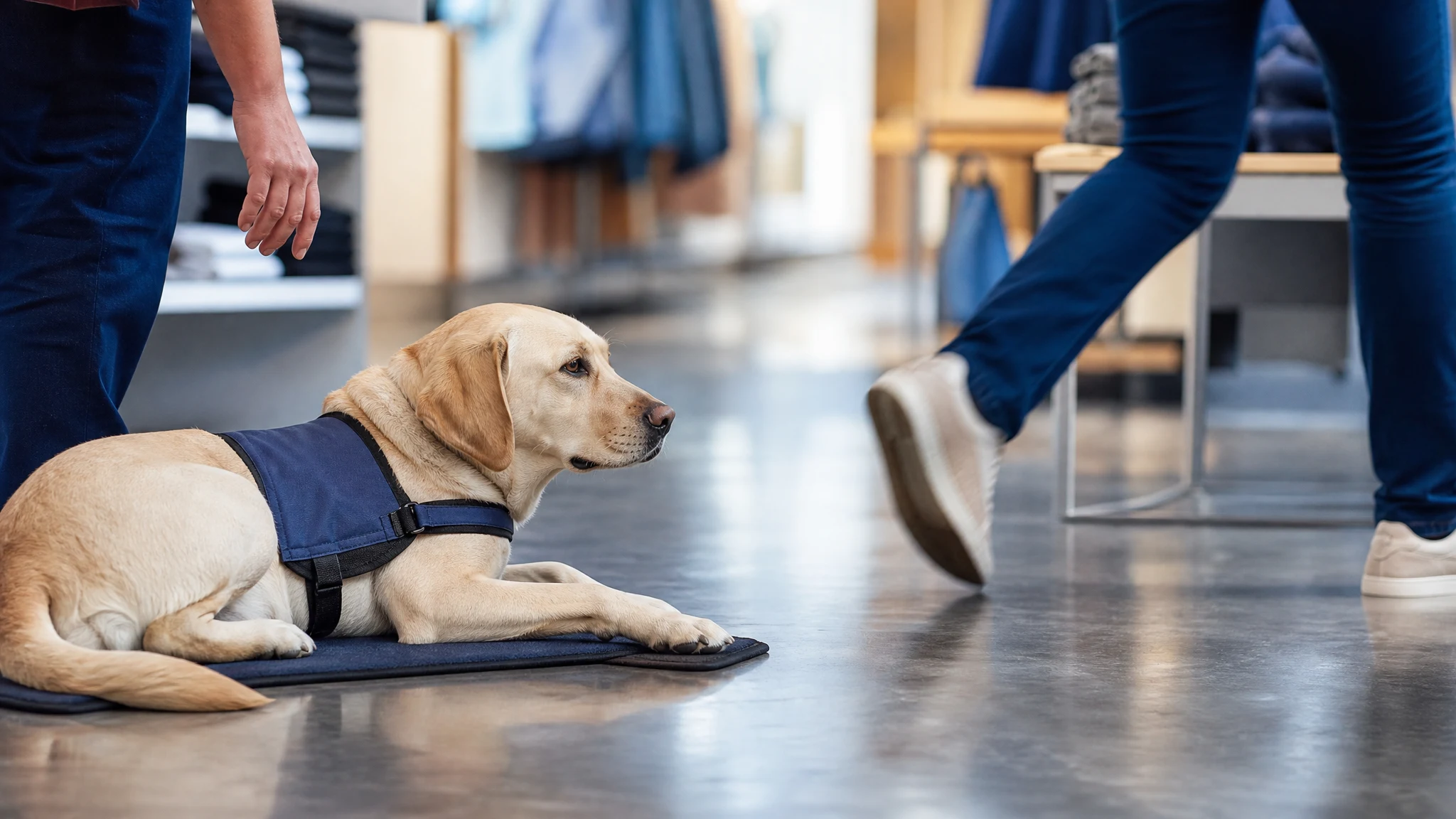
Can you pet a service dog? Not unless the handler offers. A service dog in Alabama is a working dog, trained to do tasks for a person with a disability, and the handler is the person to speak to. This is etiquette, meaning sourced reasoning about manners, not a legal rule. The law's rules are for businesses and handlers.
Can You Pet a Service Dog?
Treat the answer as no unless the handler says otherwise. The ADA.gov service animals FAQ describes a service animal as a dog individually trained to do work or perform tasks for a person with a disability. A dog doing that job is not there to be greeted.
As reasoning, a dog that is watching its handler for a cue, or that may need to alert or retrieve, cannot do that while a stranger is calling it or touching it. The handler decides whether a greeting is fine, and may say no without explaining.
What to Do Around a Working Dog
These are this guide's suggestions, built from the idea that the dog's attention is part of its job.
| Do | Do not |
|---|---|
| Speak to the handler, not the dog | Pet, call to, whistle at or kiss the dog |
| Ask permission and accept a no | Take a no as an invitation to argue |
| Give the pair room in aisles and doorways | Reach toward the dog or block its path |
| Keep your own dog back | Let your dog approach the working dog |
| Treat a dog under a table or chair as off limits | Feed the dog or drop food near it |
Why Is Asking the Handler First the Rule?
The handler is the only person who knows what the dog is doing at that moment. The dog may be in the middle of a task, may be tired, or may be learning. The ADA.gov FAQ says the dog must be under the handler's control, and a stranger's attention works against that.
Etiquette also protects the handler. A person with a disability should not have to explain a diagnosis to a stranger who wants to pet a dog. That is one reason the ADA limits staff to two questions and bars questions about the disability.
What Should You Not Ask a Handler?
Avoid asking what the person's disability is. The ADA.gov FAQ treats it as off limits for staff in public places, and it is an intrusive thing for anyone to ask. You may ask a handler about the dog in general terms if the handler seems open to it, but stop at the first sign they are not.
For the legal rules on what staff may ask, see the Alabama service dog laws guide. For a business that refuses a dog, the denied entry guide covers the handler's side.
What Etiquette Does a Handler Owe in Return?
The law puts duties on the handler too. The dog must be harnessed, leashed or tethered in public unless that interferes with its work or the person's disability prevents it, and then the handler must control it by voice, signal or other effective means (28 CFR 36.302(c)(4), on eCFR).
Under the ADA.gov FAQ, staff may ask the handler to remove a dog that is out of control if the handler does not take effective action, or a dog that is not housebroken.
Beyond the legal minimum, a practical rule for handlers is to practice calm greetings at home. If a dog is being trained for a psychiatric disability, a program for psychiatric service dog handlers can be one place to plan that practice, alongside reward-based work with the dog.
What Should Parents and Children Know?
A child who wants to pet a service dog is acting kindly, and the same rule applies. This guide suggests that adults teach children to ask the handler, not the dog, and to accept the answer. A child should not run toward a dog, hug it or offer it food.
When a handler says no, a short thank-you ends it politely. When a handler says yes, as reasoning, let the dog sniff a closed hand first and keep the touch brief.
What About a Dog in Training?
A dog in training may look like a working dog, and the same manners apply: ask the trainer or handler first. In Alabama, a dog in training must wear a harness, collar, leash, cape or backpack that says in writing that it is in training (Ala. Code 21-7-6(b)). The in-training guide explains the details.
What If You Are Not Sure It Is a Service Dog?
Do not demand proof. The ADA.gov FAQ says the ADA does not require a vest, ID tag or specific harness, so a dog without gear can still be a service dog. Staff may ask two questions in limited cases. Other customers should not ask them at all, since it is not their role.
If a dog is out of control, say so to a manager. Do not correct the dog yourself.
What If a Service Dog Seems Distracted or Unwell?
Do not step in. A dog that looks unwell or stressed is the handler's concern and the handler's veterinarian's. If you think the handler needs help, speak to the handler, not the dog, and ask what would help.
For a business, a manager can quietly ask whether the person needs anything. Staff cannot ask about the disability. Questions about the dog's health go to a veterinarian, not a bystander.
Where to Read More
For public guidance from the assistance dog field, see Assistance Dogs International. This guide does not quote it; it is listed so you can read the organization's own material.
Good manners come down to one habit: treat the dog as part of the person's equipment for the day, and the person as the one you are speaking with.