Service Dogs in Alabama: What You Need to Know
Alabama law and the ADA define a service dog by the work it is trained to do. Here is how access, housing, and training work, in plain English.
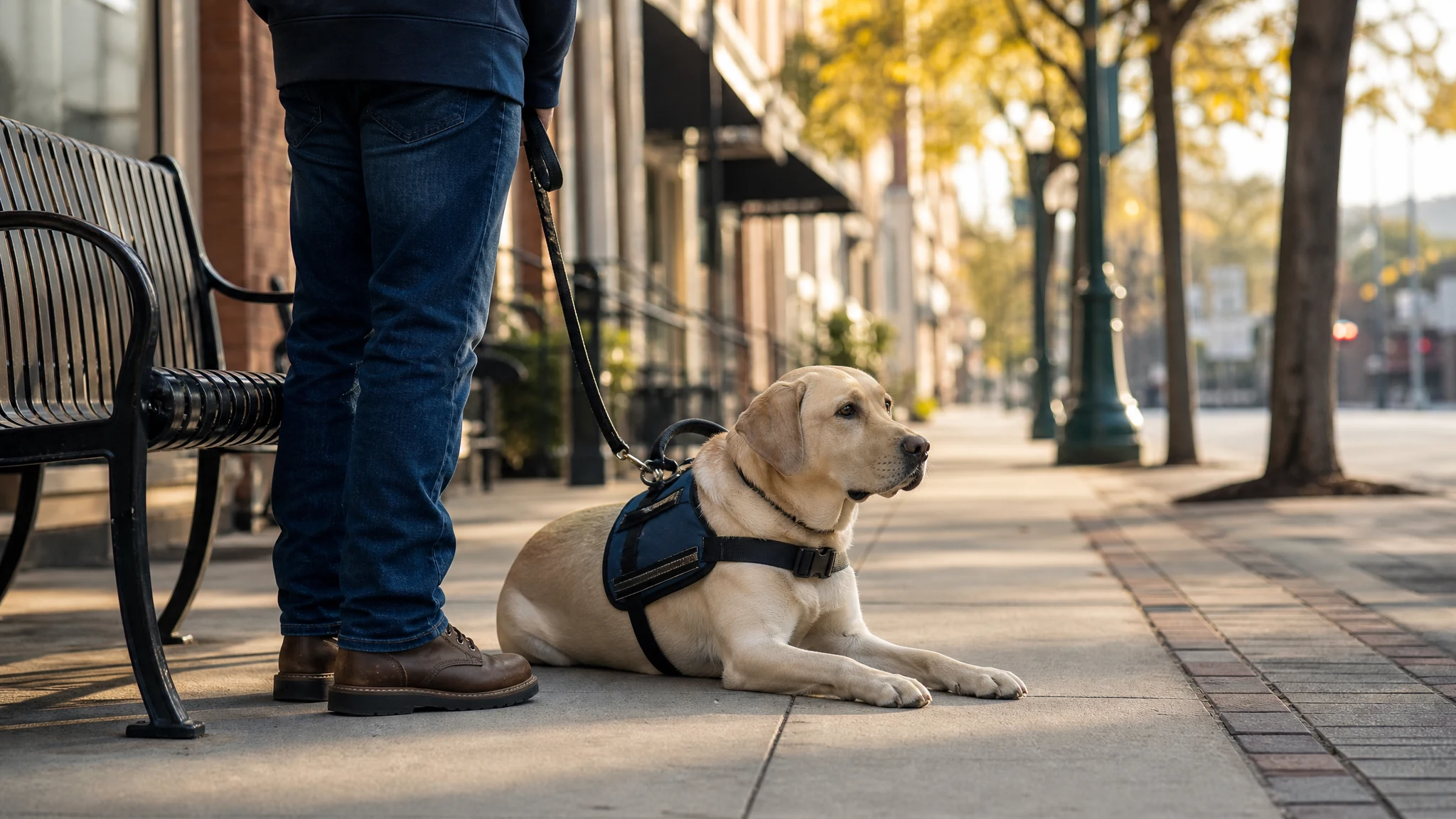
Start Here
Pick the situation closest to yours.
I Am Training My Own Dog
How owner training works, the tasks, the public access test, and dogs in training.
My Dog's Access Was Questioned
What the law says, whether registration matters, and where access rules are set.

The Federal Rules, in Short
What the ADA says, from ADA.gov; federal laws apply in all 50 states, including Alabama.
What Counts as a Service Dog?
A dog individually trained to do work or perform tasks for a person with a disability, and the tasks must relate directly to the disability. Emotional support, therapy and comfort animals do not meet that definition.
Do I Have to Register My Dog?
No. The ADA has no official registry or required certification, so an online registration or ID card does not by itself prove a dog is a service dog.
What Can Staff Ask Me?
When the need for the dog is not obvious, only two things: is the dog a service animal required because of a disability, and what work or task has it been trained to perform?
Alabama Service Dog Laws at a Glance
The Alabama rules that sit alongside the ADA, with the source for each. Read the full law guide.
| Definition | An animal trained to do work or perform tasks for a person with a disability. For sections 21-7-3, 21-7-4 and 21-7-5 the term is limited to a dog or a miniature horse. Emotional support or companionship alone is not work or tasks. A disability can be physical, sensory, psychiatric, intellectual or another mental disability (21-7-1). Read the statute |
| Public Access | A handler may bring a service animal into all areas of a public accommodation that the public normally uses, under the handler's control (21-7-4). No deposit or surcharge may be required as a condition of access. Read the statute |
| Dogs in Training | The trainer of a service animal has the same rights as a person with a disability, and the same liability for damage (21-7-4(c)(1)). A dog in training must wear a harness, collar, leash, cape or backpack saying in writing that it is in training, legible from at least 20 feet (21-7-4). Read the statute |
| Who Counts as a Trainer | A trainer is an owner with a disability who is actually involved in the training, a person who is competent and qualified and has at least one year's experience training animals, or a person with photo ID showing they are part of a recognized service dog training program, with at least one year of dog training experience (21-7-1, 21-7-4). A business may ask which kind of trainer you are and what task the dog is being trained to do (21-7-4). Read the statute |
| Fake Service Dogs | Knowingly and willfully misrepresenting a service animal's use or training is a Class C misdemeanor plus 100 hours of community service within six months (21-7-4(h)). A second conviction is a Class B misdemeanor (21-7-4(i)). Read the statute |
| Harming a Service Dog | Continuing to harass a service dog after being told to stop, or letting your loose dog harass one, is a Class C misdemeanor (13A-11-232). Injuring a service dog, or letting your dog injure one, is a Class B misdemeanor if done with reckless disregard and a Class A misdemeanor if done intentionally (13A-11-233). Killing a service dog, or injuring it so it can no longer work, is covered separately in 13A-11-234. Read the statute |

Service Dog Guides for Alabama
Each guide covers one question, from public access and housing to training, using the law as written.
Alabama Law
What Alabama law and the ADA say about public access, dogs in training, housing and fake service dogs.
- Alabama Service Dog Rules for Business Owners and Staff: A Door-Side Guide
- Do Service Dogs Have to Wear a Vest in Alabama? Gear, ID Cards and Badges
- Miniature Service Horses in Alabama: Why the State Definition Includes Them
- Alabama Service Dog Laws: Frequently Asked Questions
- Allergies and Fear of Dogs: Can Someone Else's Objection Keep a Service Dog Out?
Training
How service dogs are trained, the tasks they learn and the public access standard.
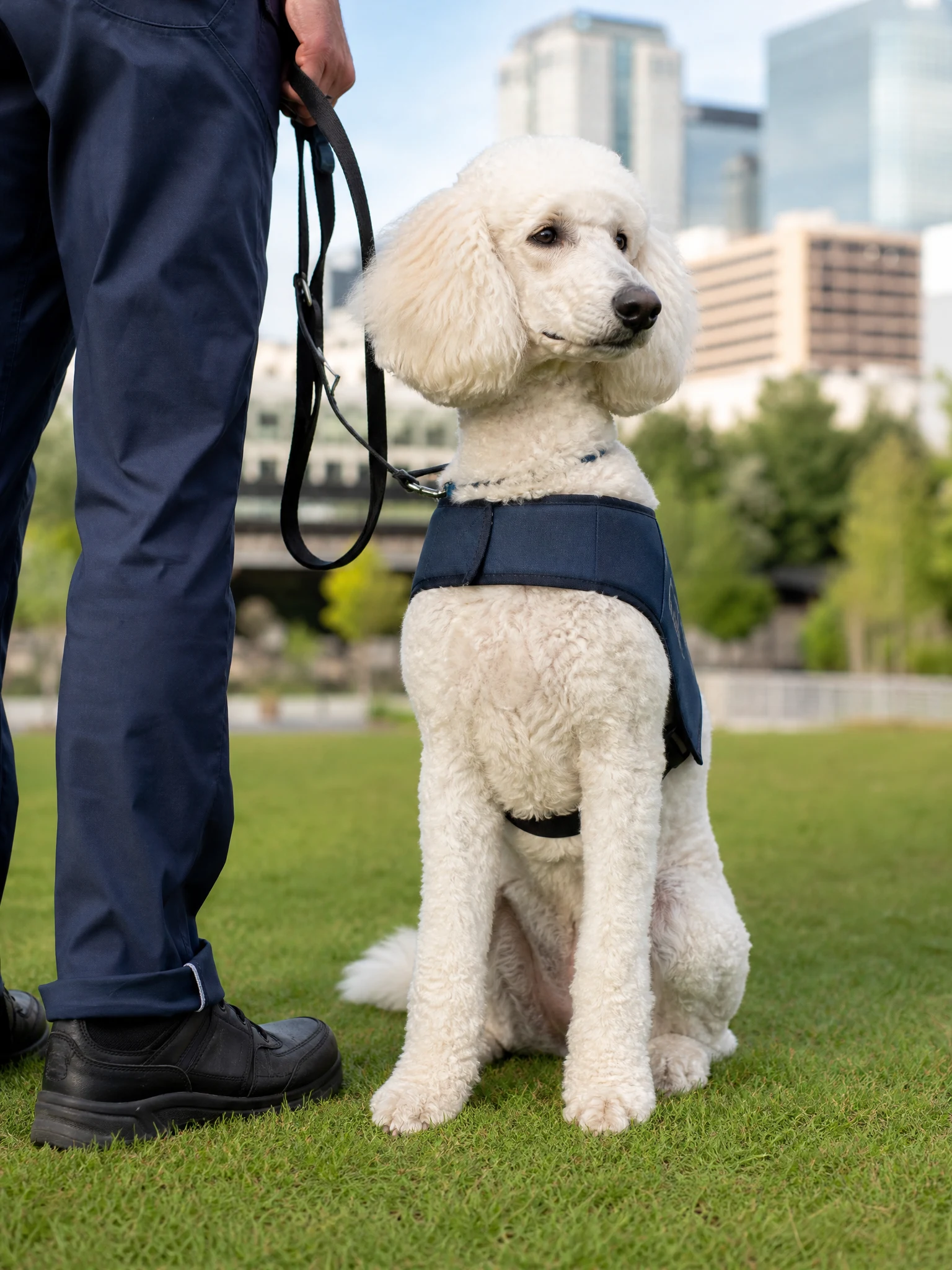
Alabama Service Dog Questions Answered
What Counts as a Service Dog in Alabama?
The ADA.gov FAQ says a service animal is a dog individually trained to do work or perform tasks for a person with a disability, and the tasks must relate directly to the disability. Alabama's Code 21-7-1 also allows miniature horses for some sections. Emotional support, therapy and comfort animals are not service animals under the ADA.
Do I Have to Register or Certify My Dog?
The ADA has no official registry or required certification, so an online registration or ID card does not by itself prove a dog is a service dog. When the need is not obvious, ADA.gov says staff may ask two questions: is the dog required because of a disability, and what work or task is it trained to perform?
Can My Service Dog Go Where Pets Are Not Allowed?
Under Ala. Code 21-7-4, a handler may bring a service animal into all areas of a public accommodation that the public normally uses, with the animal under the handler's control. No deposit or surcharge may be required for access. Housing is covered separately in 21-7-9, where a tenant cannot be charged extra but is liable for damage the animal causes.
What About a Dog That Is Still in Training?
Ala. Code 21-7-4(c) gives the trainer of a service animal the same rights as a person with a disability, and a dog in training must wear a harness, collar, leash, cape or backpack that says in writing it is in training, legible from 20 feet (21-7-6). A trainer can be an owner with a disability, someone with at least a year's experience training animals, or someone with photo ID from a recognized service dog school or organization (21-7-1).
What Happens If Someone Fakes a Service Dog?
Ala. Code 21-7-4(h) makes knowingly and willfully misrepresenting a service animal's use or training a Class C misdemeanor, plus 100 hours of community service. A second conviction is Class B under 21-7-4(i). For a denied-access complaint, check ADA.gov for the federal process, and confirm current text in the official Code of Alabama.
This page explains the law in general terms. It is not legal advice. For a specific situation, contact the agency listed on this site or an attorney.