Training a Service Dog in Alabama Heat and Humidity
This page explains the law in general terms. It is not legal advice. For a specific situation, contact the agency listed on this site or an attorney.
In Alabama, the heat and humidity should set your service dog training schedule: train in the coolest part of the day, keep sessions short, move hard work indoors, and stop at the first sign of heat stress. This guide gives a practical plan and warning signs. A veterinarian decides what is safe for your individual dog.
Why Does Alabama Heat Change the Training Plan?
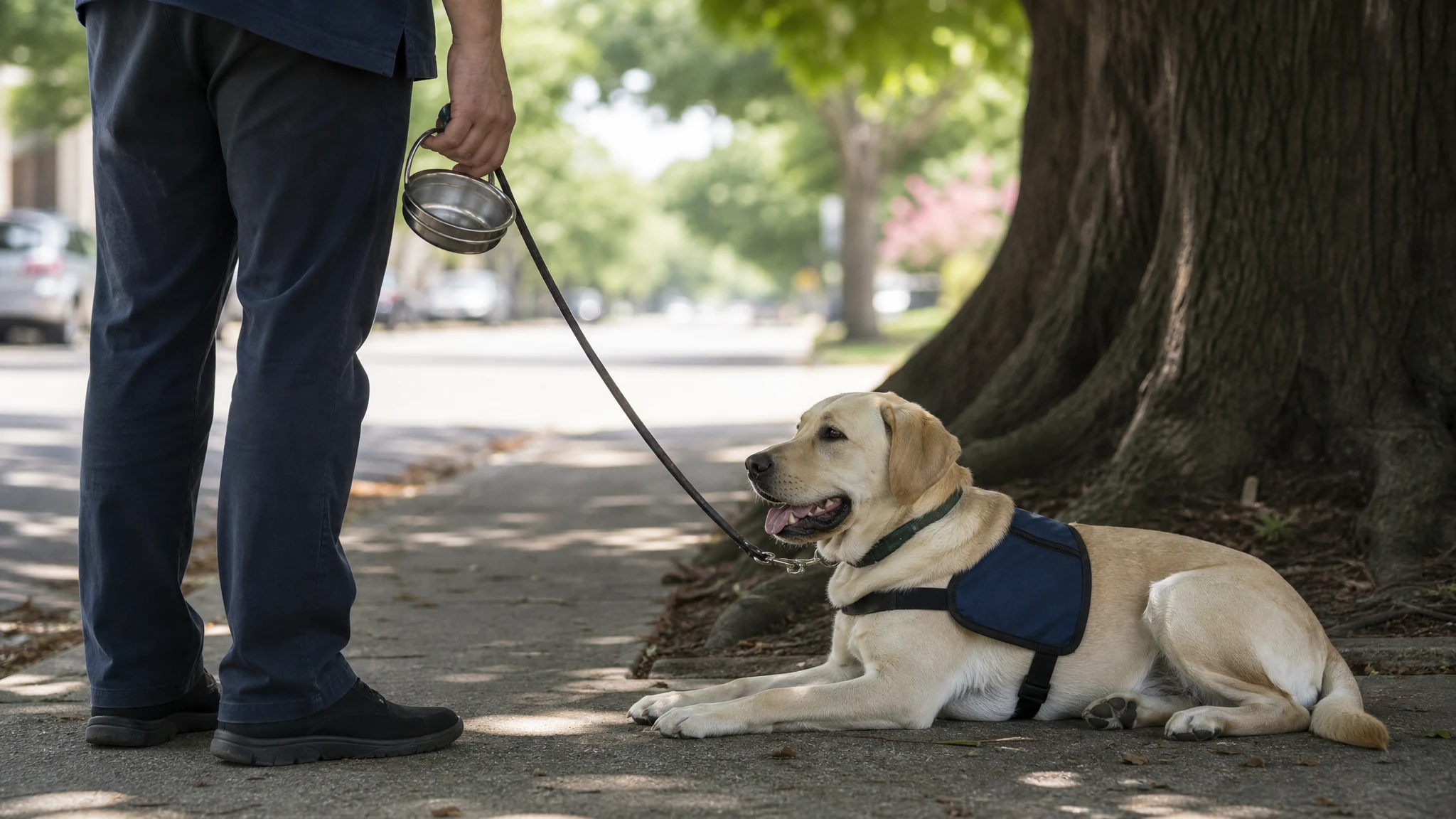
A service dog in training is asked to work outdoors, on pavement, in parking lots and in places where shade is scarce. Those are the same places a handler in Alabama has to practice in.
As a practical rule, treat the weather as part of the lesson plan, not something to push through. A dog that is overheated cannot learn well and may start to link the work with feeling bad.
Here is the usual explanation, which your veterinarian can confirm for your dog. Dogs cool themselves largely by panting, and panting works less well when the air is already damp. That is why a muggy day can be harder on a dog than the thermometer suggests.
This page gives no temperature cutoffs. None were verified for this guide, and a safe number depends on the dog. Age, weight, coat, face shape, fitness and health all matter, so ask a veterinarian where your dog's limits are.
What Is a Safe Service Dog Heat Plan for Alabama?
This is the guide's suggestion, built from the reasoning above. It is a schedule, not a medical rule. Adjust it with a veterinarian's advice.
- Choose the cool end of the day. Plan outdoor sessions for early morning or after sunset in the hot season.
- Warm up in shade. Start in a shaded or indoor spot before moving to a harder setting.
- Keep sessions short. Several brief sessions beat one long one. End while the dog is still eager.
- Offer water and rest. Pause between exercises, and let the dog drink and lie down in a cool place.
- Move heavy work inside. Practice duration and distraction work in an air-conditioned building when the weather is rough.
- Cool down before you leave. Finish in shade, then let the dog settle before any car ride.
- Skip the session when in doubt. A missed day costs little. Heat illness can cost a great deal.
Never leave a dog in a parked car. That is a practical rule with no exceptions, and it applies in every season.
How Do You Check Hot Pavement for a Dog?
Asphalt and concrete in the sun can hold heat long after the air feels tolerable. Pads are skin.
As a practical test, press the back of your bare hand on the surface where the dog will stand. If you cannot comfortably hold it there, the dog should not be walking or doing stationary exercises on it. Move to grass, shade or a different surface.
A few other habits help, all from the same reasoning:
- Surface changes. Look for shade, grass and cooler flooring before you ask for a long down or stay.
- Pad checks. Look at the pads after a session for redness, blisters or limping, and call a veterinarian if you see them.
- Gear. A harness, a vest or a cape that holds heat against the body may suit a cool day and not a hot one, and none of it is required by the ADA. The vest guide covers that.
What Are the Warning Signs a Dog Is Too Hot?
Stop and cool the dog when you notice these signs. This list is general information, not a diagnosis, and a veterinarian can tell you what to watch for in your dog.
- Heavy or noisy panting. Breathing that is louder, faster or harder than the dog's usual working pace.
- Drooling. More saliva than normal, or thick and stringy saliva.
- Slowing down. Lagging behind, refusing cues the dog usually knows, or lying down and not getting up.
- Unsteady movement. Stumbling, wobbling or looking confused.
- Changes in the gums or tongue. Gums that look unusually red or pale.
- Vomiting or collapse. Treat either as an emergency.
If you see any of these, stop training, move the dog to shade or indoors, offer small amounts of water, and call a veterinarian right away. Do not wait to see whether the dog recovers on its own, and do not continue the session.
Can You Train a Service Dog Only in Winter?
No, but the plan changes with the season. A cool-season stretch is a good time for outdoor work you cannot easily move inside, such as longer walks, outdoor settling and sessions on varied surfaces.
Warm months can still carry real training: indoor practice, short early sessions and quiet skills at home. Plan the year around the dog's comfort and your own schedule.
During the cooler months, it also helps to keep going with tasks for a dog being trained for a psychiatric disability. A course in psychiatric service dog tasks can give you an order for those tasks, so the work you do indoors in summer builds on what you started outside.
Public-access work still carries the usual rules. Under the ADA, the dog must already be trained before it can be taken into public places, according to the ADA.gov service animals FAQ. Alabama's rule for a dog in training is covered in service dogs in training in Alabama.
What Else Belongs in a Hot-Season Plan?
Heat is one piece of a dog's health and fitness picture. Bring your questions about weight, coat, breathing and exercise to a veterinarian, and ask what a workday outside should look like for your dog.
Reward-based training fits a hot-season plan because the sessions are short and light. The American Veterinary Society of Animal Behavior (AVSAB) supports reward-based methods, and nothing in this plan calls for corrections or force.
For the larger picture of getting started, see the pillar guide, service dog training in Alabama: laws, programs and costs. If you train your own dog, how to owner-train a service dog in Alabama lays out the steps. Alabama also has a storm season, so read the hurricane and tornado plan for handlers.
Heat planning is worth the effort. A dog that stays comfortable and keeps learning is easier to train.