Service Dog Stress Signs, Burnout and Retirement
This page explains the law in general terms. It is not legal advice. For a specific situation, contact the agency listed on this site or an attorney.
A service dog in Alabama can show stress through changes in body language, behavior, appetite, sleep or work. Treat a change as information: lower the workload, rule out pain or illness with a veterinarian, and see a certified behavior professional if the problem is behavioral. Retirement is a decision for the handler and the veterinarian together.
What Are the Service Dog Stress Signs to Watch For?
Every dog shows stress differently, so the most useful baseline is your own dog's normal. This guide's suggestion is to notice what the dog looks like when relaxed and working well, then watch for changes from that.
The signs below are general information, not a diagnosis. Many can come from pain or illness as well as stress, which is why a veterinarian comes first.
- Body language. Lip licking, yawning, a tucked tail, a lowered body, or turning away when none of these is normal for the dog.
- Work changes. Slower responses, missed cues, or tasks the dog used to do reliably.
- Behavior changes. New avoidance, restlessness, trouble settling, or irritability.
- Physical changes. Changes in appetite, sleep, digestion, weight or coat.
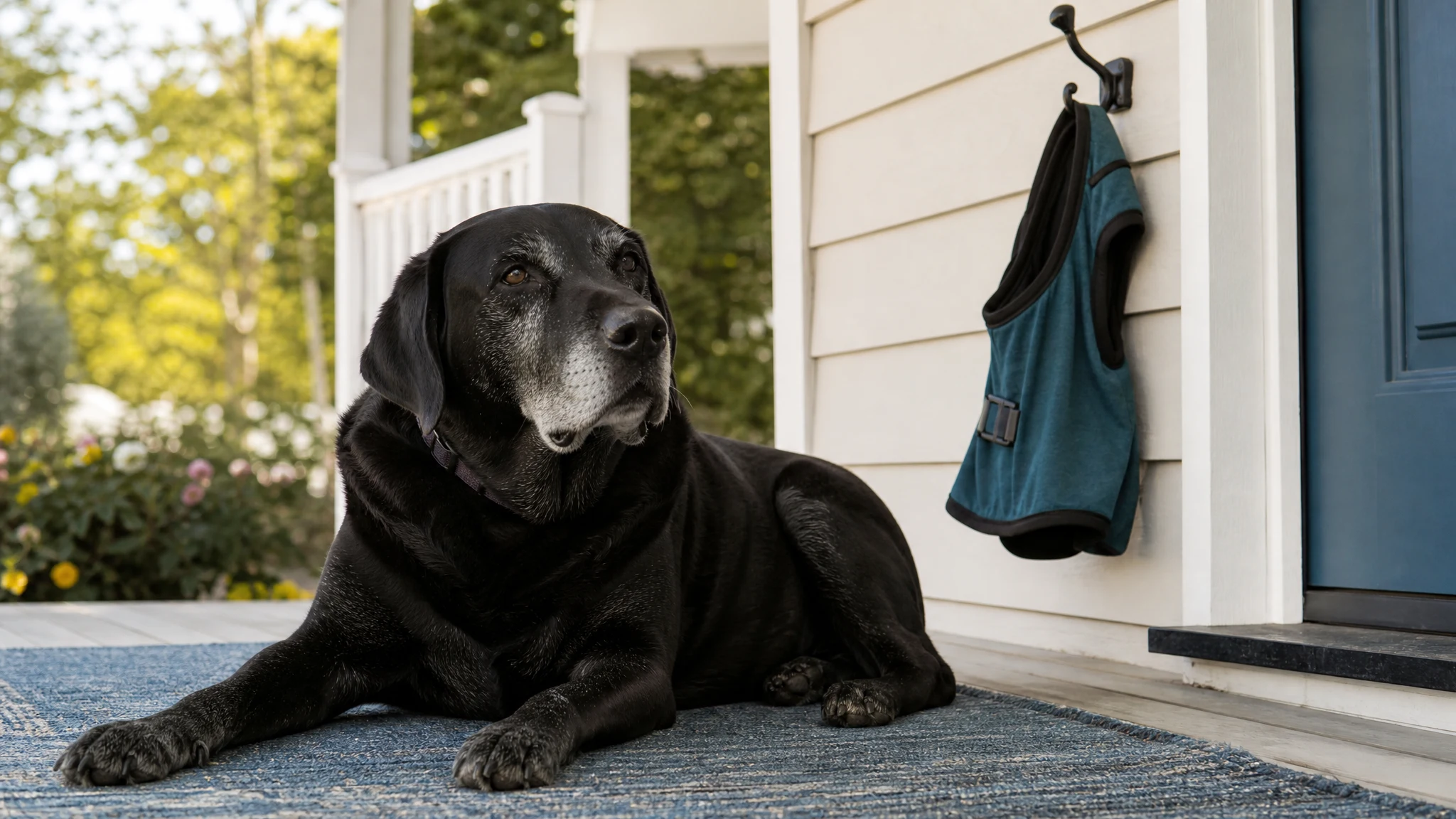
- Reluctance. Hesitating at the vest, the harness or the door where the dog used to be keen.
What to Do When You See Them: A Signals and Response Table
| What you notice | A practical first response | Who to involve |
|---|---|---|
| A new sign that appears suddenly | Pause public work and keep the day calm | A veterinarian |
| Pain, limping, appetite or sleep change | Rest the dog and note what you see | A veterinarian |
| Fear, avoidance or reactivity in certain places | Avoid those places and make the work easier | A certified behavior professional, after a veterinarian |
| Growling, snapping or biting | Keep people and other animals away | A veterinarian and a certified behavior professional |
| Slower, less accurate work with no other cause found | Shorten workdays and add real rest | A veterinarian, then your trainer |
The table is the guide's reasoning, not a medical protocol.
What Is Service Dog Burnout?
Burnout is not a legal or veterinary term used in the sources for this guide. People use it for a dog that has lost its interest in the work after too much of it, too much pressure, or too many hard settings.
Treat it as a possibility to raise with a veterinarian rather than a label to apply yourself. The cause could also be pain, age or illness, and each needs a different answer.
Reward-based training, which the American Veterinary Society of Animal Behavior (AVSAB) supports, belongs in a recovery plan as well as in a training one. Do not respond to stress with shock, prong or choke collars, alpha rolls or dominance. A stressed dog needs less pressure, not more.
How Can You Reduce Workload and Stress?
These are suggestions, labeled as such, and your veterinarian may adjust them.
- Shorten the workday. Cut errands that can be done without the dog.
- Schedule real rest. Give the dog time off the job, with the vest and harness put away.
- Match the setting to the dog. Avoid crowds, noise and heat when the dog is already tired. See training a service dog in Alabama heat for a plan.
- Go back a step in the training. If a skill has slipped, practice it in an easier place. The ladder in proofing a service dog around food, other dogs and crowds shows how.
- Keep a note. A short log of what changed and when helps a veterinarian.
When Should a Service Dog Retire?
A veterinarian can tell you about the dog's health, joints, senses and comfort. The handler knows how well the dog is doing the work and whether it still seems to want to. Together they decide.
This guide cannot name an age or a signal that means a dog should stop. No source used for this guide sets one.
Reasons handlers and veterinarians might consider retirement include pain, illness, age, loss of reliability and a dog that no longer seems content working. A dog that can no longer do its tasks safely is a reason to stop working, whatever the cause.
What Changes for Your Rights After Retirement?
The ADA.gov service animals FAQ defines a service animal as a dog individually trained to do work or perform tasks for a person with a disability. Reading that plainly, a dog that has stopped doing the work is no longer doing what the definition describes. That is reasoning, not a ruling.
Housing is a separate question. Federal and Alabama housing rules treat service and assistance animals differently, and HUD withdrew its detailed notices in September 2025. Ask HUD or an attorney, and see service dog housing rights in Alabama.
A new dog is a new training project. Under the ADA, a dog must already be trained before it goes into public places. How to owner-train a service dog in Alabama covers the steps, and service dog training in Alabama: laws, programs and costs covers the legal side.
A retired dog can stay with you as a companion. Whether its status changes for housing or any other purpose is a question for HUD or an attorney.
If you are planning a successor dog and the next dog will be trained for a psychiatric disability, a course on how psychiatric service dogs are trained is one place to learn what the process involves.